
What Is Included in a Commercial Office Fitout?
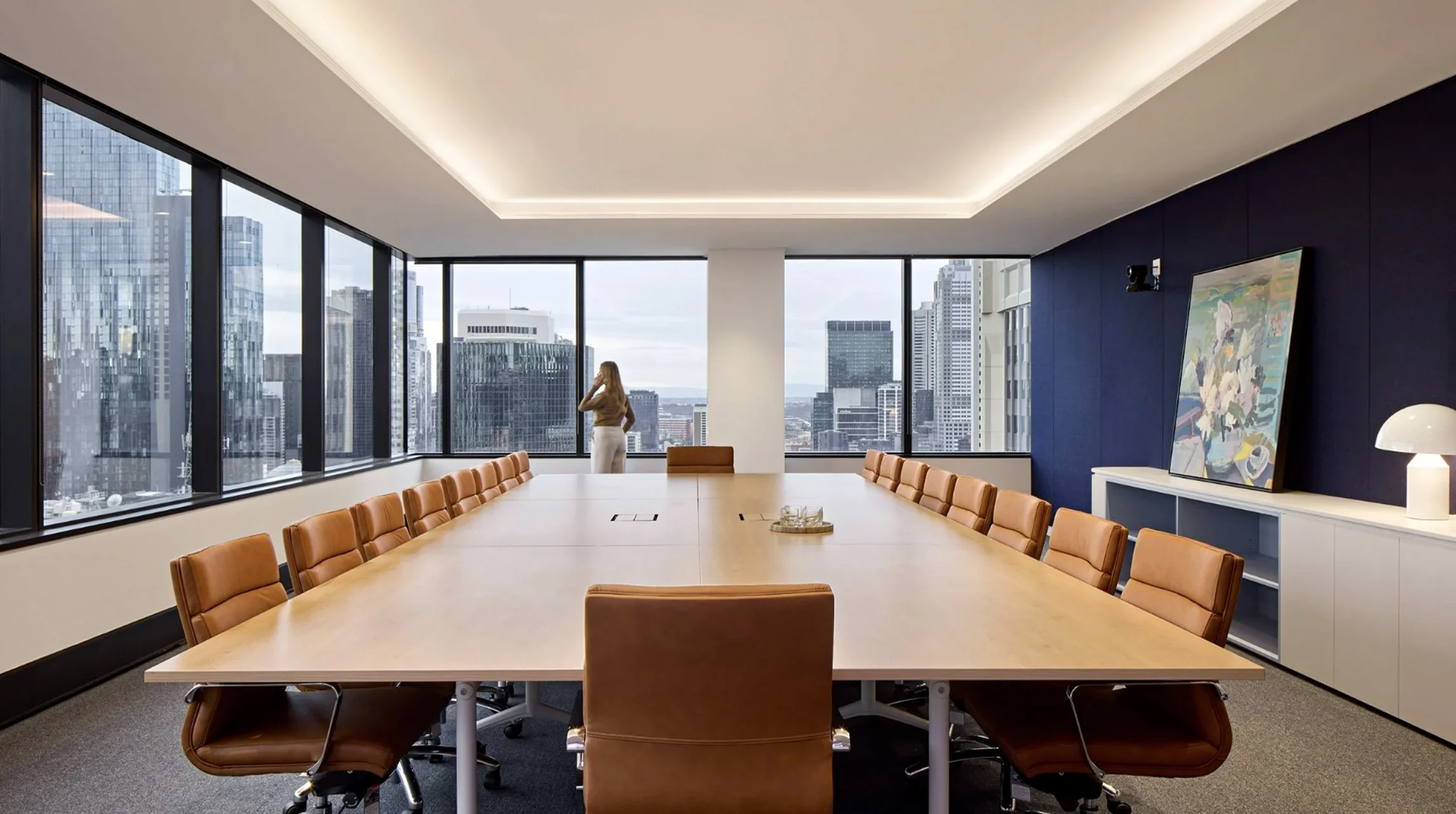
A commercial office fitout is more than walls, desks and finishes. It is the physical translation of your business strategy, how your people work, collaborate, grow and perform, and in addition how best to greet and accommodate your clients and visitors.
At Graham Nicholas, we deliver fully integrated workplace solutions for some of Australia’s leading professional services, legal and corporate organisations. The most successful fitouts are not just defined by what is built, but by how well every element works together.
Below is a clear guide to what is typically included in a modern commercial office fitout, and why each component matters.
1. Workplace Strategy & Briefing
Every fitout should begin with a strategic foundation. This phase defines:
How your teams work today
How they will work in the future
Space utilisation, productivity and growth planning
Cultural, brand and wellbeing objectives
Technology and security requirements
Overall high level time schedules and milestones
This ensures the space is designed around your people, not the other way around.
2. Design & Documentation
This phase translates strategy into a buildable workplace:
Test-fit layouts and space planning, and total areas required
Concept design and visualisations
Design development
Construction documentation
Building compliance and authority approvals
It is where function, aesthetics, cost, timelines, and compliance must align.
3. Project & Cost Management
A successful fitout is governed as tightly as any capital project:
Programme management
Project staging and existing fitouts
Budget and cost control
Risk and change management
Consultant coordination
Stakeholder reporting
With this, the best design can outcomes are achieved.
4. Base Build & Services Integration
This is the core infrastructure of your workplace:
Make Good
Mechanical, electrical and hydraulic services
Lighting and power
Data, AV and security
Fire services and life safety
Integration with base building systems
These systems must be engineered to support both performance, budgets, and compliance.
5. Construction & Fitout Works
This is where the workplace physically takes shape:
Demolition and preparation
Partitioning, ceilings and floors
Joinery, reception and feature elements
Acoustic treatments
Finishes, signage and branding
Quality here defines both durability and first impressions.
6. Furniture, Technology & Move-In
The final stage ensures the space is ready to perform from day one:
Workstations and loose furniture
IT, AV and meeting room technology
Wayfinding and storage solutions
Defect management and commissioning
Relocation and change management support
This stage bridges construction and business continuity.
At Graham Nicholas, we integrate strategy, design, project management and construction into one accountable team. This ensures:
Faster delivery
Transparent cost control
Fewer variations
Stronger budget and timeline outcomes
Final Thought
A commercial fitout is not just a building project, it is a business transformation. When done well, it strengthens culture, improves performance and supports long-term growth.
Let’s Talk
If you are planning a new workplace, relocation or lease renewal, contact Graham Nicholas to explore how an integrated fitout can support your business strategy.